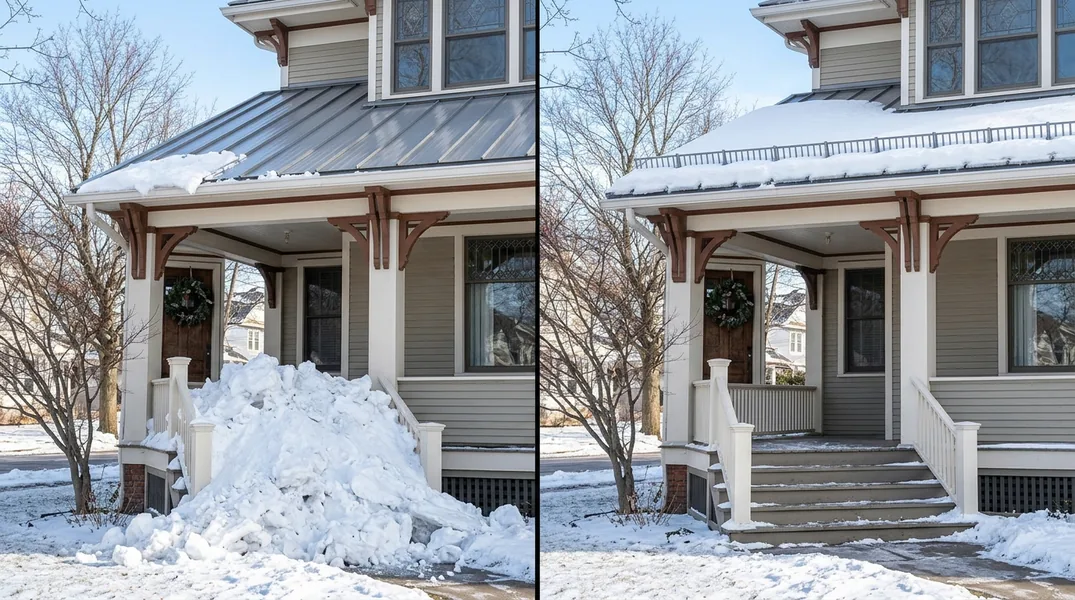
Why Buffalo Metal Roofs Face Unique Winter Challenges
Living in Buffalo means you already know that winter here is not just cold, it is a serious test of your roof. Lake-effect snow can dump several feet of snow in a single storm, and the freeze-thaw cycles that follow create conditions that punish poorly designed roofs. Metal roofing is an excellent choice for this climate because it sheds snow efficiently and stands up to heavy loads, but that same smooth surface and snow-shedding ability means you need to think carefully about snow guards and ice dams.
When snow slides off a metal roof, it can come down in a sudden, heavy avalanche. That is great for clearing the roof, but it is dangerous for anything underneath: gutters, landscaping, entryways, parked cars, and even people. At the same time, if snow does not slide, it can pile up and contribute to ice dams at the eaves. Understanding how these forces interact is the key to a safe, long-lasting metal roof in Western New York.
How Snow Guards Prevent Metal Roof Snow Sliding
Snow guards are small brackets or bars installed across the roof surface to break up snow into smaller pieces and slow its release. On a metal roof, snow sliding is not a defect, it is a feature of the low-friction surface. But uncontrolled sliding can rip gutters off the fascia, crush shrubs, and create a hazard at doorways. Snow guards metal roof systems are designed to hold the snowpack just long enough that it melts or releases gradually rather than all at once.
There are several styles, from individual pad-style guards to continuous bar systems, and the right choice depends on your roof pitch, panel profile, and the areas below. For example, a roof over a frequently used walkway or driveway in Amherst may need more robust protection than a simple backyard shed. A professional Metal Roof Installation should include a snow retention plan from the start, because retrofitting guards later costs more and can compromise the panel finish if not done carefully.
Ice Dams on Metal Roofs: Causes and Solutions
An ice dam forms when heat escaping from the attic melts snow on the upper roof, and that meltwater refreezes at the colder eaves. The resulting ice barrier traps water, which can back up under the panels and into the house. Metal roofs are not immune to ice dams, but they handle them differently than asphalt shingles. The metal surface itself does not absorb water, and the panels are designed to shed moisture, but the real fix is stopping the heat loss and improving ventilation.
Proper attic insulation, air sealing, and balanced intake and exhaust ventilation are the first line of defense against an ice dam metal roof problem. In some cases, adding a ice-and-water shield underlayment at the eaves provides a secondary barrier. For homes in Williamsville and across the region, a qualified installer will inspect the roof deck and attic before recommending a metal roof, because no roofing material can compensate for a building envelope that is losing too much heat. This is one reason a Standing Seam Metal Roofing project should begin with a thorough assessment, not just a material quote.
Snow Load Metal Roof: What Buffalo Homeowners Should Know
Snow load is the weight of accumulated snow and ice on your roof, and it is measured in pounds per square foot. Building codes in the Buffalo area require roofs to be designed for substantial snow loads, and metal roofing systems are typically engineered to meet or exceed those requirements. The advantage of metal is that it is strong for its weight, and the smooth surface encourages snow to shed before it builds up to dangerous levels. That said, snow load metal roof performance depends on the panel gauge, the spacing of purlins or decking, and the quality of the installation.
It is important to understand that snow guards can actually increase the load on a roof by holding snow in place, so they must be specified correctly. A qualified installer will calculate the load and choose guards that release snow safely without overstressing the panels. If you are considering a Metal Roof Over Shingles (Retrofit), the existing structure must be evaluated to confirm it can handle both the new roof weight and the expected snow load. Skipping this step is a common and costly mistake.
Metal Roof Installation Near Me: Choosing the Right Buffalo Contractor
When you search for metal roof installation near me in the Buffalo area, you will find plenty of contractors, but not all of them understand lake-effect snow. A local installer should be able to explain how snow guards will be laid out, how ice dams will be addressed, and how the roof will be ventilated. They should also be familiar with local permit requirements and inspection processes. Experience with Metal Roof Replacement in this climate is not optional, it is essential.
Ask for references from nearby towns like Clarence, and ask specifically about snow retention and ice dam prevention. A good contractor will welcome those questions. If you want to discuss your project, you can call Buffalo Metal Roofing at (716) 261-3070 or request a free estimate. It is also wise to review pricing ranges ahead of time so you can budget for snow guards and underlayment as part of the total project, not as an afterthought.
Looking for a professional metal roofing contractor in Buffalo? Buffalo Metal Roofing responds fast for all your metal roofing needs.
Get a Free QuoteOur services: Metal Roof Installation · Standing Seam Metal Roofing · Metal Roof Replacement